READ MORE
Saturday, July 16, 2016
3d printing restaurant
READ MORE

Thursday, July 7, 2016
food and architecture

As long as chefs and restaurateurs recognise and respect the importance of architecture and the necessity of provoking and inspiring it, and architects view the production, transformation and consumption of food in the same way, they should get along famously.
LINK
Inter-Farm-Market

READ HERE
Wednesday, June 29, 2016
Bio plastics

The IAAC also employed some unusual materials in the study, including orange peel, coffee powder and shrimp shells. There was a method to this and the material used has a genuine effect on the final plastic. The orange peel infused plastic was stronger, with better heat resistance, while the material containing coffee grounds displayed hydrophobic qualities.
The IAAC concluded that a combination of coffee and orange would make the best bioplastic and the geometry of the structure could then be varied to produce differing behaviour. Not every country has an excess of coffee and orange, but the study notes that each individual country can find their own combinations of food waste and plastic.
The amount of waste can also affect the level of shrinkage and bend over time in the plastic, which can be tuned for the individual purpose.
READ MORE
food unites us
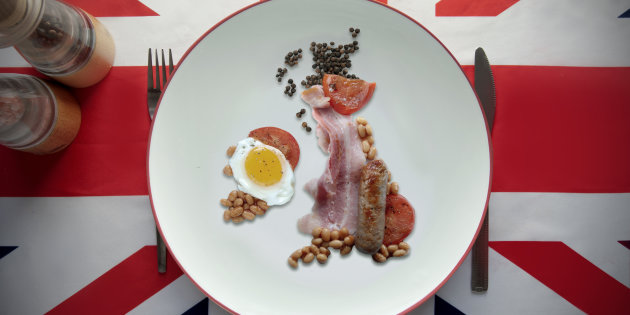
If politics divides us, it is surely food that unites. It is food that inspired most if not all the great campaigns to discover the world: spices that drove trade between the ancient Egyptians, Greeks and Romans with Asia, the Arabs to cross the Indian Ocean, the Persians to find overland routes to India, the Europeans to discover the Americas.
While many, many wrongs were done during the great ages of Empire, the movement of people around the globe over the last 5,000 years in particular has been of infinite mutual benefit. As people discovered new cultures they discovered new ideas, new people to fall in love with, new books to read, new colours, new architecture, new foods.
In kitchens around the world, people welcomed new elements, new techniques of cooking, new ingredients, incorporated them into their own cuisines and synthesised them into new dishes.
Saturday, June 18, 2016
Uber for food

UberEATs, which launched on Thursday, delivers lunch, snacks and dinner to Londoners from 11am to 11pm, seven days a week.
The service is already available in 16 cities including New York and Paris. But will Uber be able to cope with London’s dreadful traffic? Or beat established competition like Deliveroo at service and speed?
READ MORE
FLW - foodie commune

Taliesin worked closely in conjunction with Taliesin West, which Wright built in the McDowell Mountains of present-day Scottsdale in 1938 as a winter retreat for himself and the majority of the Wisconsin residents. Throughout the colder months, eggs, milk, butter, cheese, and preserves were sent by rail from those looking after the farm to their peers in Arizona. Wyer plans to revive this tradition this season with a shipment of preserved produce.
Sounds kind of like a commune, right? It closely resembled one. So much so that shortly before Wright’s death in 1959, a Wisconsin circuit judge determined that Taliesin was in fact operating for the sole benefit of Wright and not as a non-profit organization. Whether Taliesin was an Emersonian utopia or labor camp is still up for debate, along with the stigma surrounding the property’s existence. “Throughout the whole history of this place, they were so isolated that people in town shunned them, called them socialists, and didn’t want to get involved with them. They didn’t know what was going on with them and didn’t want to know,” Dungue says. “I think that carried through history and people still don’t know.”
READ MORE
Thursday, June 16, 2016
cricket housing

Joachim says the team quickly observed that crickets "don't like density" and become fussy with their food in crowded situations.
LINK
Monday, June 13, 2016
Farm Pod

“This is how you’re going to get people fed when we have no water,” said Mike Straight, chief executive officer of FarmPod LLC, who dreamed up the idea of putting a fully automated aquaponics system inside a shipping container. “This is how you get fed when you have no land.”
Straight and his fiancée, Siria Bonilla, see the pod, the Santa Fe startup’s first prototype, as a common-sense solution to food deserts. New Mexico, where many people live in remote communities far from grocery stores or farmers markets, has some of the nation’s most expansive food deserts. About 300,000 people in the state, or about 15 percent of the population, lack access to healthy foods, according to recent studies.
Inside the shipping container that makes up the FarmPod’s bottom level, fish grow in three large tanks. One tank holds koi and two hold barramundi, a mild-flavored fish, also known as Asian sea bass, that’s popular in Thai cuisine. Water containing the fish’s waste is pumped up to the greenhouse on the second floor, where it trickles down through the vertical towers, feeding the roots of young plants. The clean water circulates back to the fish.
Read more here
Thursday, June 2, 2016
changing american diets

The United States Department of Agriculture keeps track of these sort of things through the Food Availability Data System. The program estimates both how much food is produced and how much food people eat, dating back to 1970 through 2013. The data covers the major food categories, such as meat, fruits, and vegetables, across many food items on a per capita and daily basis.
In the interactive below, we look at the major food items in each category. Each column is a category, and each chart is a time series for a major food item, represented as serving units per category. Items move up and down based on their ranking in each group during a given year.
READ MORE
Infinity Kitchen

MVRDV designs transparent Infinity Kitchen to make food healthier and sexier
Venice Architecture Biennale 2016: Dutch office MVRDV has designed a completely see-through glass kitchen that aims to inspire a "more healthy, if not sexy" approach to food (+ slideshow).
Making its debut at the Venice Architecture Biennale, the Infinity Kitchen has been proposed as a way of improving the cooking process by drawing greater attention to food choice, preparation and waste.
Each of the units and shelves is transparent, as well as the tap, sink area and worktops.
"If we imagine everything is transparent, clear and clean, doesn't it mean that the only thing that is colourful and visible is our food?" said the firm's co-founder Winy Maas.
"Doesn't it then imply that we are encouraged to love the food, in that way, and that maybe it even becomes more healthy, if not sexy?"
MVRDV hopes that the transparent elements will expose all aspects of the kitchen's function and processes, highlighting people's food choices as well as less attractive aspects like waste storage and disposal.
"The Infinity Kitchen wants to make better cuisine, better food preparation practices and it wants to raise awareness for the one room that we all rely so heavily on, and the processes that go on inside of it," said MVRDV.
"How much food do we have hidden away? How much waste is really being created? Is the kitchen really as clean as we like to think it is? But [the Infinity Kitchen] also wants to do one main thing: celebrate food and cooking."
READ MORE
ReGen Village

But a new vision of a more sustainable 'integrated neighbourhood' community is being implemented in the Netherlands, with the first of a series of high-tech farm villages set to be completed next year. The project, being built just outside of Amsterdam, is the brainchild of California-based developer ReGen Villages, and after its pilot community is finished in 2017, the company plans to bring the concept to Sweden, Norway, Denmark, and Germany.
READ MORE
greenhouse/community farming in Halifax

“It’s just something great. We’re all jumping for joy over here,” said Jessie Jollymore, Hope Blooms founder.
“To me, it really sheds a light on the youth, community and the innovation here. It shows that believing in young minds can shape a beautiful environment.”
The greenhouse opened last May at Brunswick Street and Divas Lane, and served to help the grassroots, youth-driven initiative that allows members of the community grow their own food.
The Hope Blooms message is that the youth can make a difference in their lives and community, and they help at the garden in Halifax.
READ MORE
Monday, May 23, 2016

plant tower

read more
Thursday, May 19, 2016
More Bompas

While they work to establish a permanent home for the BMoF, B&P do collaborations with established institutions like the Victoria and Albert Museum as well as temporary installations. “We’re sort of a moving, roving nomadic museum at the moment,” he says. The latest iteration took place at the Borough Market this winter. It included exhibits like “Be the Bolus,” whereby visitors could experience what it feels like to be a hunk of chewed-off food going along the human digestive track. The cross-modal experience was obtained with a PillCam, and a massage chair that pummeled you up and down as watched the film, so you could feel what it’s like for the bolus. There was also the butterfly gallery that highlighted the fact that butterflies are “some of the unsung heroes of pollination.” The takeaway? “We are trying to think about how to make sustainability really sexy, making people ask questions rather than belaboring them with gloom and doom about the current state of the planet and food security.”
MORE
Monday, May 16, 2016
big bee hives

The beehive project aims to educate Islanders on the importance of honeybees and to bring awareness about their situation.
Some experts say one in every three bites of food we eat is made possible by bees and other pollinators.
The BGHJ firm is interested in the activation of downtown Charlottetown and strengthening the core of city, making it better place to live, said architect Shallyn Murray
READ MORE
Sunday, May 15, 2016
indoor farming

With extensive R&D and production collaborations with some of the world’s most reputable names in research, pharmaceuticals and food production, Indoor Harvest maintains a growing design portfolio of Intellectual Property based on our Modular Racking and High Pressure Aeroponics platforms.
WEBSITE
fake food

"Developed especially for children and families, Guixé’s large-scale, custom-designed space will combine the artist’s own graphics with design challenges and hands-on activities for young people that encourage a rethinking of the familiar foods that we eat each day and sprout new ideas for food concepts and flavours."
Learn more here
Tuesday, April 26, 2016
secret history of a food that everybody loves

The argument depends on the differences between how grains and tubers are grown. Crops like wheat are harvested once or twice a year, yielding piles of small, dry grains. These can be stored for long periods of time and are easily transported — or stolen.
Root crops, on the other hand, don't store well at all. They're heavy, full of water, and rot quickly once taken out of the ground. Yuca, for instance, grows year-round and in ancient times, people only dug it up right before it was eaten. This provided some protection against theft in ancient times. It's hard for bandits to make off with your harvest when most of it is in the ground, instead of stockpiled in a granary somewhere.
But the fact that grains posed a security risk may have been a blessing in disguise. The economists believe that societies cultivating crops like wheat and barley may have experienced extra pressure to protect their harvests, galvanizing the creation of warrior classes and the development of complex hierarchies and taxation schemes.
READ MORE
Subscribe to:
Posts (Atom)